Advanced Push / Pull / Legs Gym Program for Men (6 Days)
Program overview
The push/pull/legs (PPL) split is a favorite among experienced lifters and bodybuilders. You train six days per week, and each muscle group gets hit twice with high volume. This plan is for men with 2+ years of consistent training, good technique on the main lifts and solid recovery habits.
Each day starts with a heavy compound lift and moves to accessories in the 8–15 rep range. Rest days are not optional extras: if your sleep is short or your lifts are falling, take an extra rest day. Every 6–8 weeks, include a deload week where you cut sets by half.
Sessions take 60–75 minutes. Eat at maintenance or in a small surplus to recover from this volume.
Equipment needed: Full gym.
Weekly schedule
- Mon: Push A
- Tue: Pull A
- Wed: Legs A
- Thu: Push B
- Fri: Pull B
- Sat: Legs B
- Sun: Rest
You can move days around to fit your life. Just avoid training the same muscle group hard on two days in a row, and keep at least one full rest day per week.
Warm-up (8–10 minutes, before every workout)
- 3–5 minutes of easy cardio: brisk walking, marching on the spot, light jumping jacks or cycling.
- Cat-cow stretch × 8 reps to loosen the spine.
- World’s greatest stretch × 5 per side to open the hips and upper back.
- 10 bodyweight squats and 10 glute bridges.
- 1–2 light warm-up sets of the first exercise of the day.
The workouts
Perform the exercises in order. "Rest" is the time between sets. Click any exercise for animated pictures and step-by-step instructions.
| Exercise | Sets | Reps | Rest |
|---|---|---|---|
| 5 | 5 | 180 sec | |
| 4 | 8–10 | 90 sec | |
| 3 | 8 | 120 sec | |
| 3 | 12–15 | 60 sec | |
| 4 | 15–20 | 45 sec | |
| 3 | 12 | 45 sec |
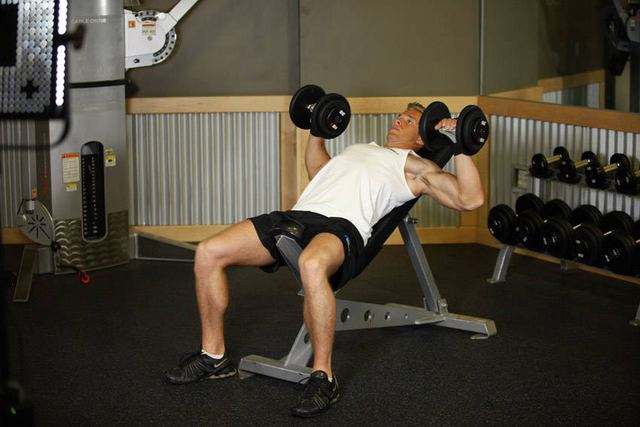
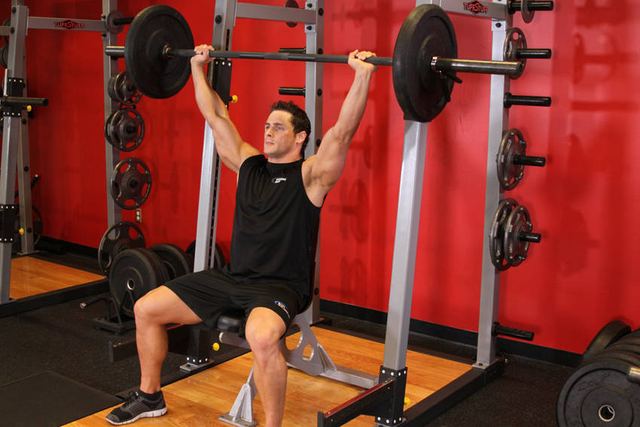
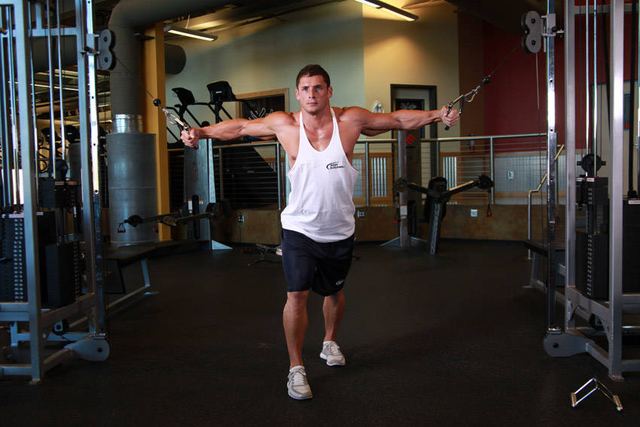
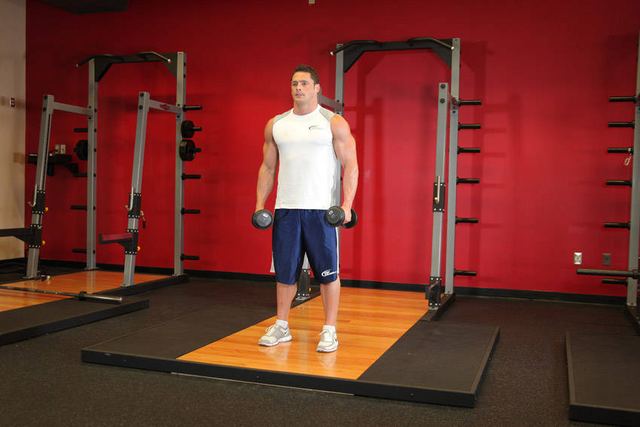
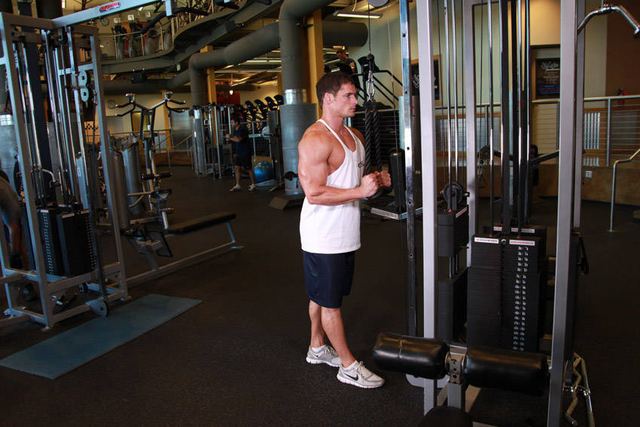
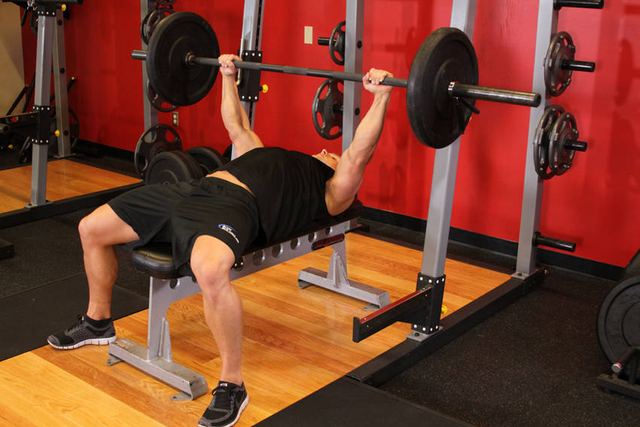
Key exercise of the day: Barbell Bench Press. The bench press is the most popular upper-body exercise in the gym. Give it your best focus while you are fresh.
| Exercise | Sets | Reps | Rest |
|---|---|---|---|
| 4 | 6–10 | 120 sec | |
| 4 | 8 | 120 sec | |
| 3 | 10–12 | 75 sec | |
| 3 | 15 | 45 sec | |
| 3 | 8–10 | 60 sec | |
| 3 | 12 | 45 sec |
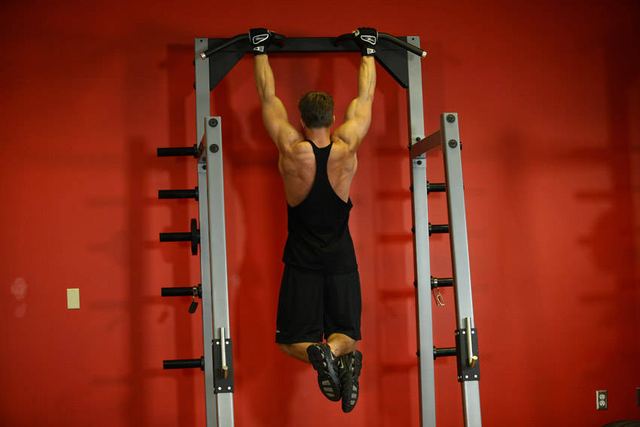
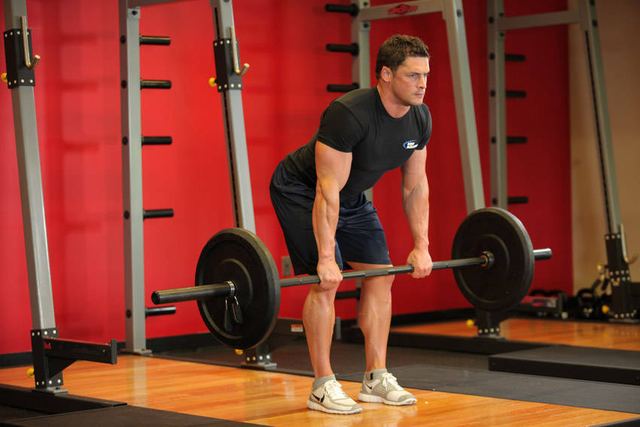
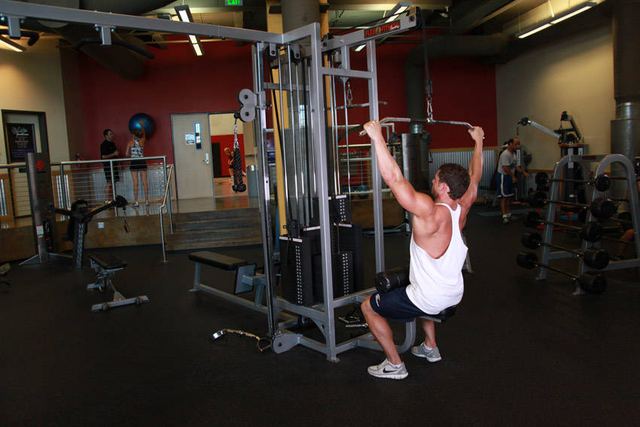
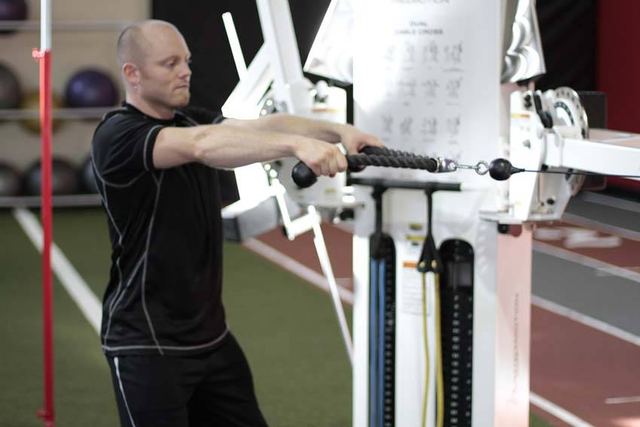
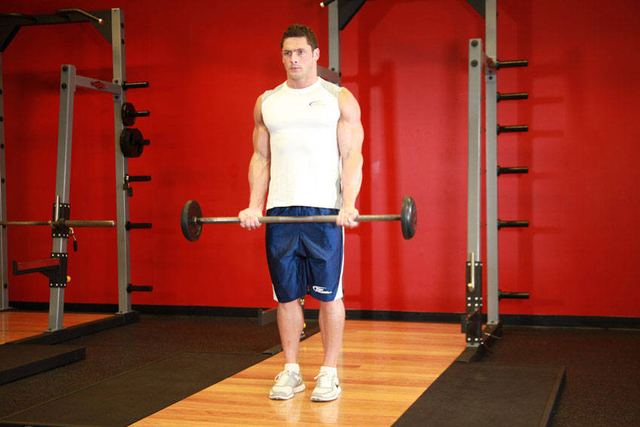
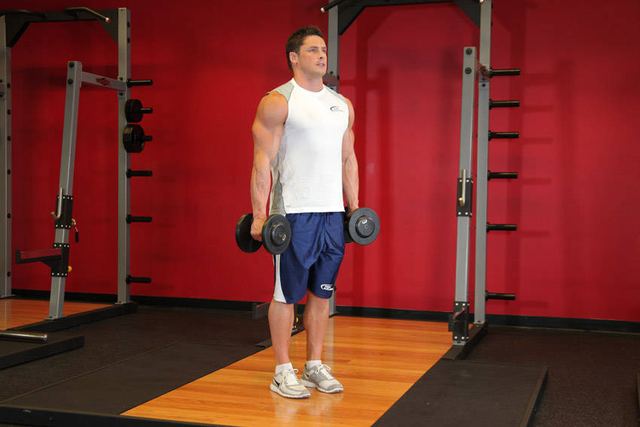
Key exercise of the day: Pull-Ups. The pull-up is the king of bodyweight back exercises. Give it your best focus while you are fresh.
| Exercise | Sets | Reps | Rest |
|---|---|---|---|
| 5 | 5 | 180 sec | |
| 4 | 10–12 | 120 sec | |
| 3 | 8–10 | 120 sec | |
| 3 | 15 | 60 sec | |
| 4 | 12–15 | 45 sec | |
| 3 | 12 | 60 sec |
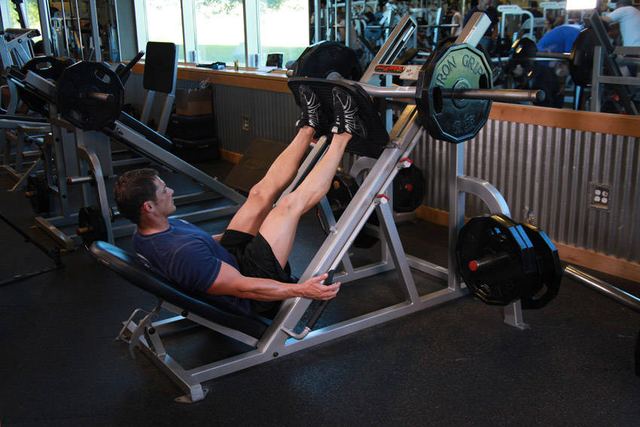
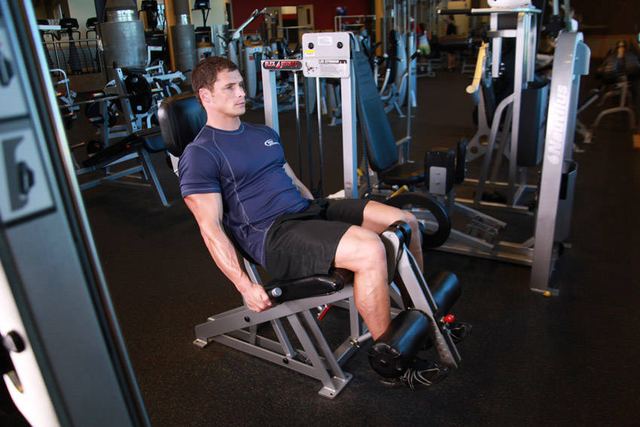
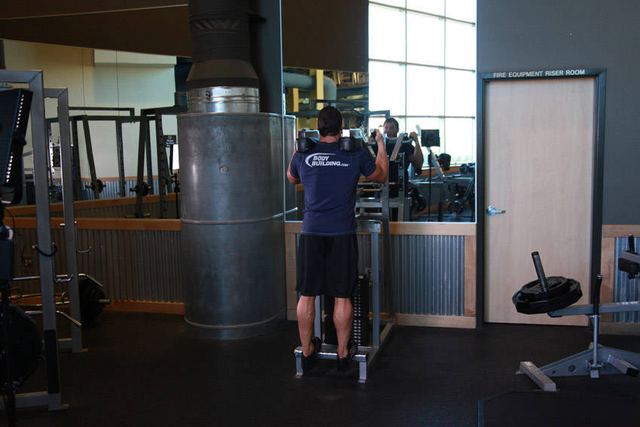
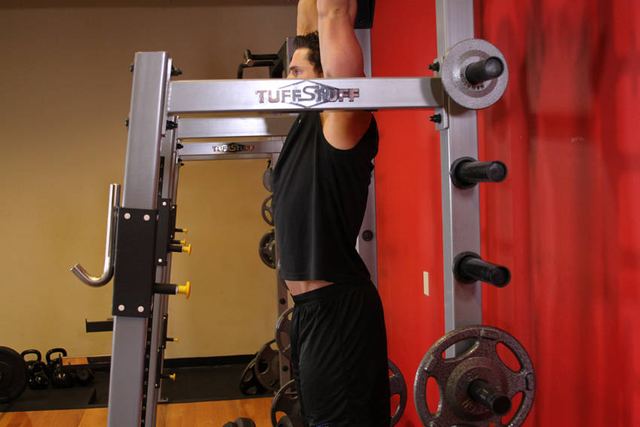
Key exercise of the day: Barbell Back Squats. The barbell back squat is often called the king of exercises. Give it your best focus while you are fresh.
| Exercise | Sets | Reps | Rest |
|---|---|---|---|
| 4 | 6 | 150 sec | |
| 4 | 8–12 | 90 sec | |
| 3 | 8–12 | 90 sec | |
| 3 | 10 | 75 sec | |
| 3 | 12 | 60 sec | |
| 3 | 10–12 | 60 sec |
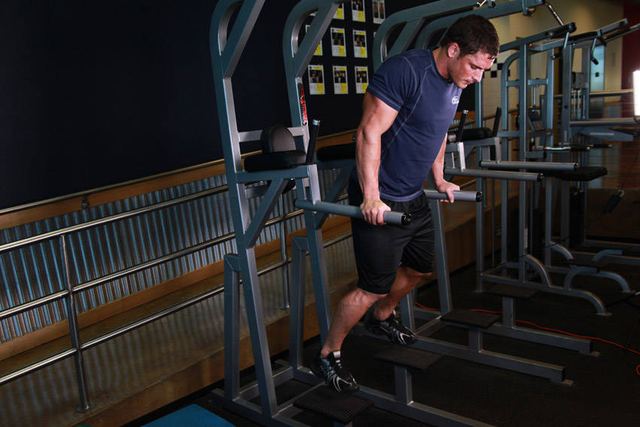
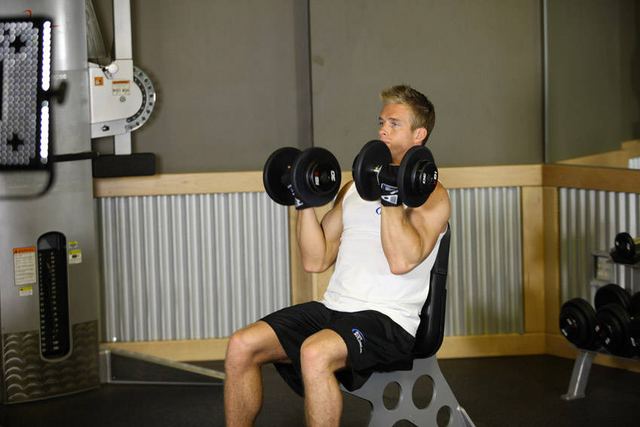
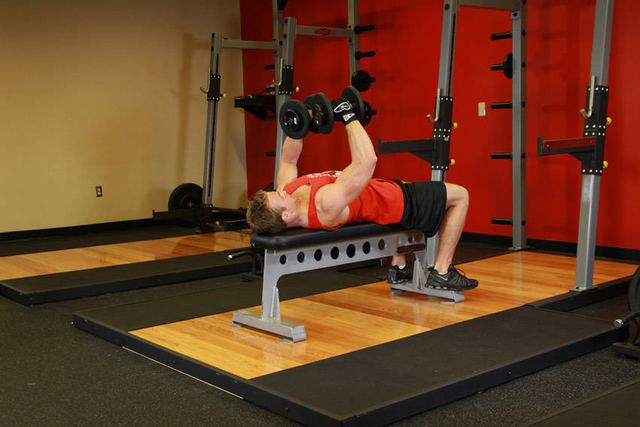
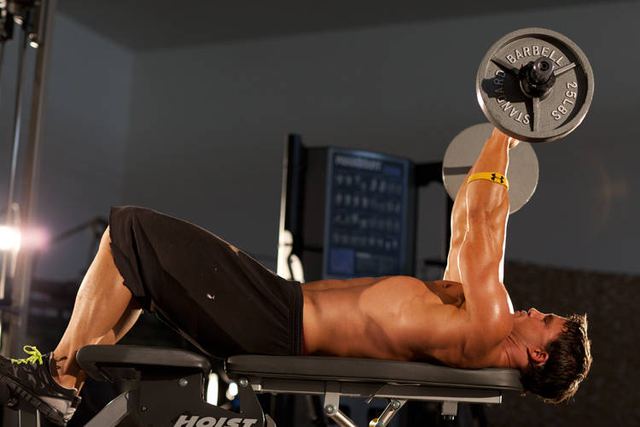
Key exercise of the day: Barbell Overhead Press. The standing barbell overhead press (military press) is a key strength lift for the shoulders and triceps. Give it your best focus while you are fresh.
| Exercise | Sets | Reps | Rest |
|---|---|---|---|
| 4 | 3–5 | 180 sec | |
| 4 | 8–10 | 90 sec | |
| 3 | 10–12 | 75 sec | |
| 3 | 15 | 45 sec | |
| 3 | 12 | 45 sec | |
| 3 | 10–12 | 45 sec |
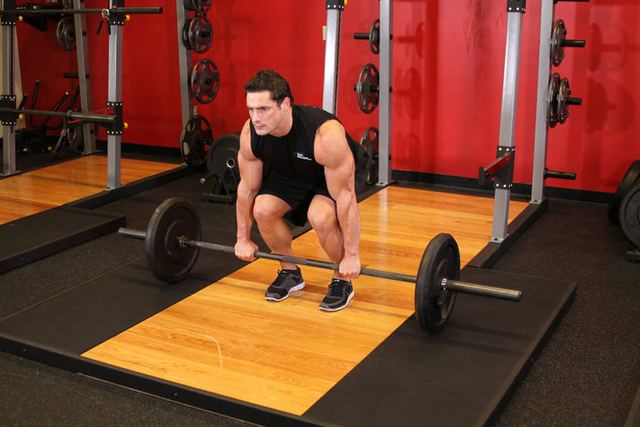
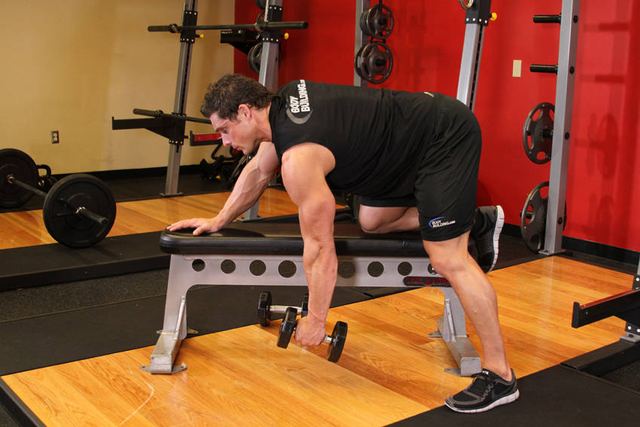
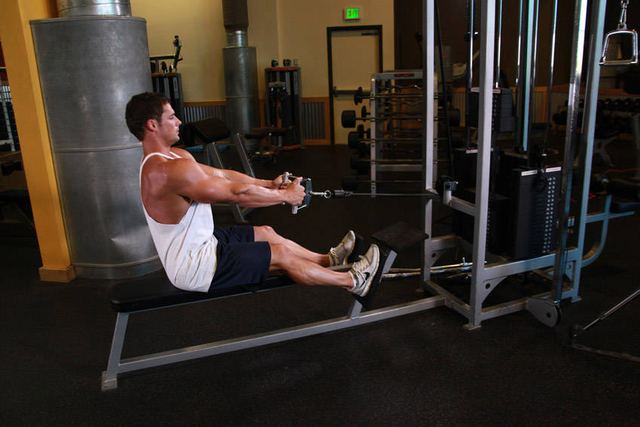
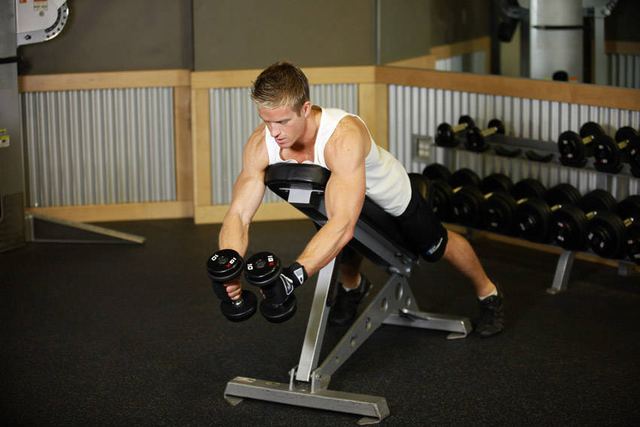
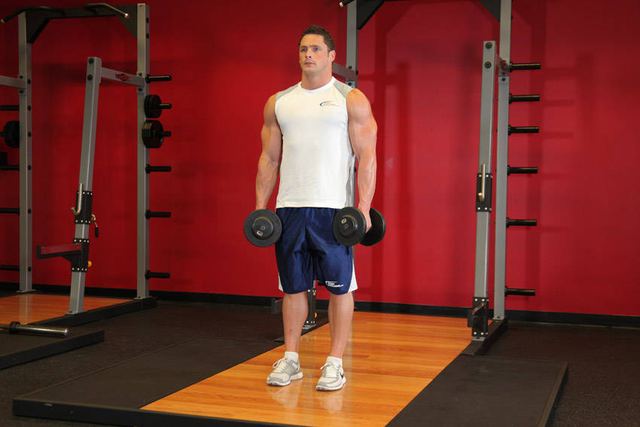
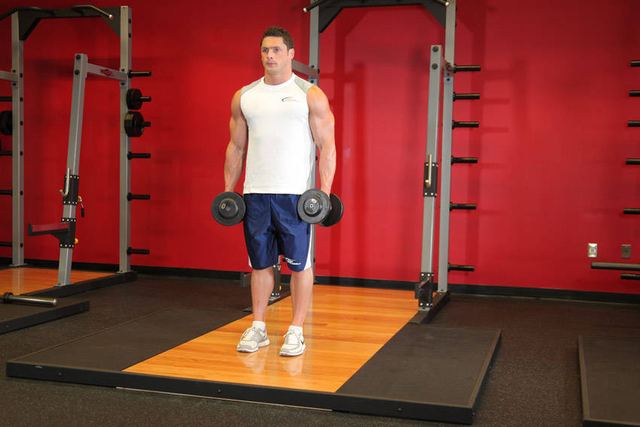
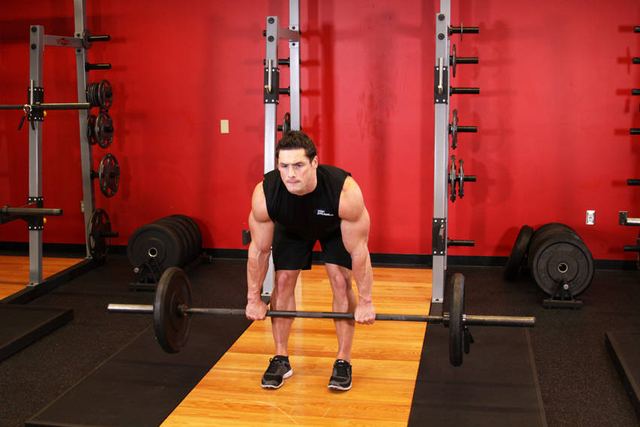
Key exercise of the day: Barbell Deadlifts. The deadlift means lifting a loaded barbell from the floor until you stand tall. Give it your best focus while you are fresh.
| Exercise | Sets | Reps | Rest |
|---|---|---|---|
| 4 | 6 | 150 sec | |
| 3 | 10 per leg | 90 sec | |
| 3 | 10 | 90 sec | |
| 4 | 12 | 60 sec | |
| 2 | 12 per leg | 60 sec | |
| 3 | 20 | 45 sec | |
| 3 | 15 per side | 45 sec |
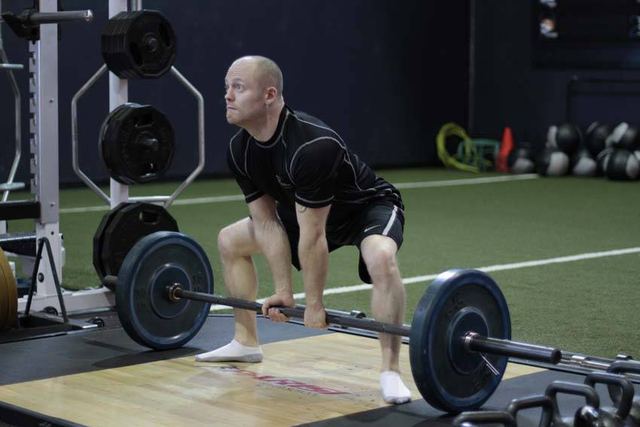
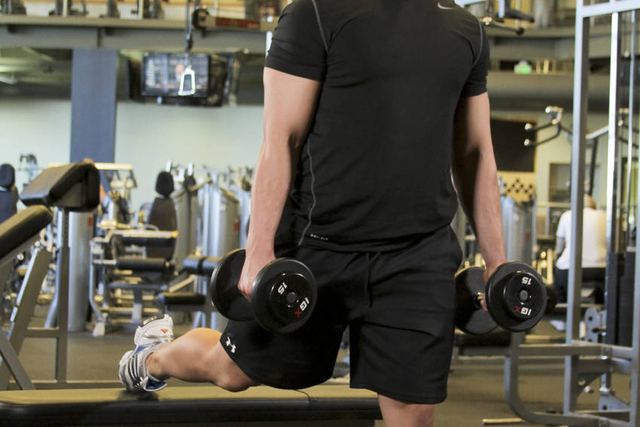
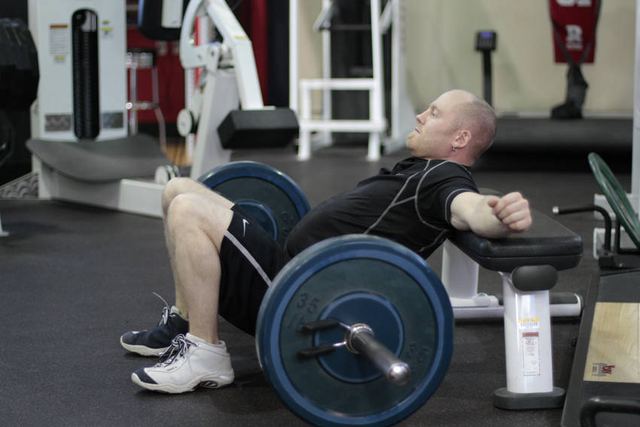
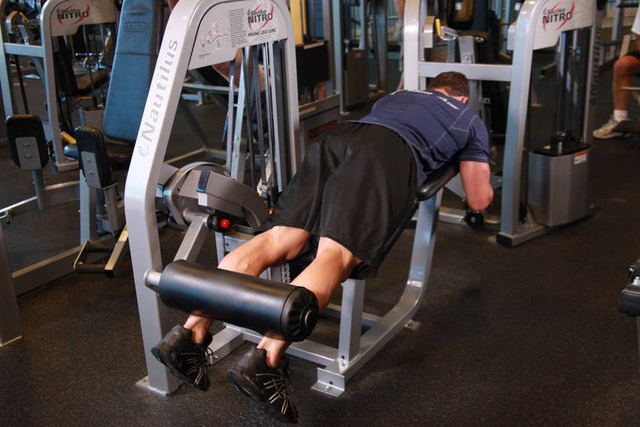
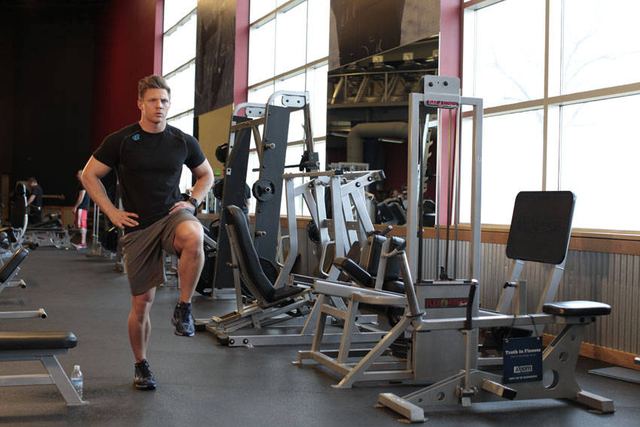
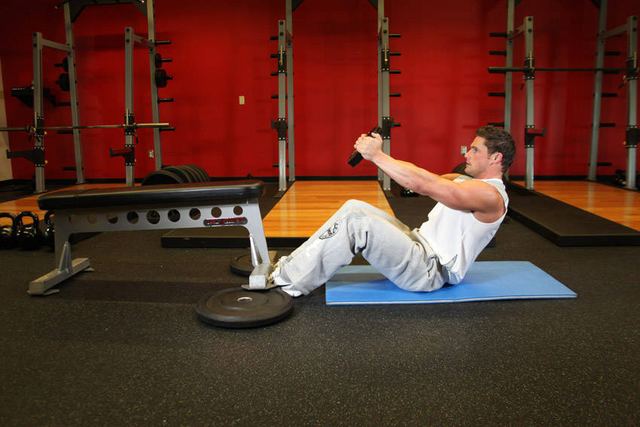
Key exercise of the day: Sumo Deadlifts. The sumo deadlift uses a wide stance with the hands inside the knees. Give it your best focus while you are fresh.
Cool-down (5 minutes)
Finish every session with 60 seconds of child’s pose, slow walking and a few deep breaths. Gentle stretching after training will not prevent soreness, but it helps you relax and shift into recovery mode.
8-week progression
| Weeks | What to do |
|---|---|
| Weeks 1–2 | Accumulation: moderate weights, 2–3 reps in reserve, focus on mind-muscle connection. |
| Weeks 3–4 | Increase load on compound lifts; accessories to 1–2 reps in reserve. |
| Weeks 5–6 | Intensification: add a top set on the first lift of each day, accessories to near failure. |
| Week 7 | Overreach week: highest volume and effort. Prioritize sleep and food. |
| Week 8 | Deload: half volume, lighter loads. Test or estimate your 1RM with our calculator. |
Keep a simple training log: date, exercise, weight (or variation) and reps for each set. If a number goes up compared with last week, you are making progress. If you stall for 2–3 weeks on a lift, check your sleep and food first, then swap to a similar exercise for a few weeks.
Cardio and daily steps
Strength training is the base of this program, but cardio supports heart health and fat loss. Aim for 150 minutes of moderate activity per week (for example 30 minutes of brisk walking, five days a week), which matches the U.S. Physical Activity Guidelines. A daily step goal of 7,000–10,000 is a simple target that also burns a meaningful number of calories without hurting recovery.
If your goal is fat loss, add 2–3 cardio sessions of 20–30 minutes. If your goal is maximum muscle gain, keep cardio easy so it does not interfere with recovery.
Nutrition for this program
Training creates the signal; food provides the building blocks. Three simple rules work for almost everyone:
- Eat enough protein: about 0.7–1 g per pound of body weight (1.6–2.2 g/kg) per day, spread over 3–5 meals.
- Set your calories for your goal: a moderate deficit to lose fat, a small surplus to build muscle, maintenance to recomposition. Use our calorie calculator.
- Eat mostly whole foods: lean meats, fish, eggs, dairy, beans, whole grains, potatoes, fruit and vegetables.
For a ready-made menu, try our 7-day meal plan or get personal numbers with the plan builder.
Recovery: sleep, rest days and soreness
Muscles grow between workouts, not during them. Sleep 7–9 hours per night, take at least one full rest day per week, and manage stress. Mild muscle soreness (DOMS) 24–72 hours after a workout is normal, especially in the first weeks. Light activity such as walking usually helps it fade faster. Sharp joint pain is not normal: stop the exercise and get it checked.
Frequently asked questions
Can I do this program if I have never trained before?
Yes. However, it is designed for advanced lifters. If you are new, start with the beginner version first: men's gym beginner plan.
How long until I see results?
Most people feel stronger within 2–3 weeks and see visible changes in 6–8 weeks, if training is combined with good nutrition and sleep.
What if I miss a workout?
Just continue with the next workout in the order. Do not try to double up. Consistency over months matters much more than one missed session.
Can I swap an exercise?
Yes. Swap it for one that trains the same muscle group with similar difficulty. Our exercise pages list easier and harder variations.
What should I do after the 8 weeks?
Take an easy deload week, then repeat the program with heavier weights or move up to the next level.
More programs
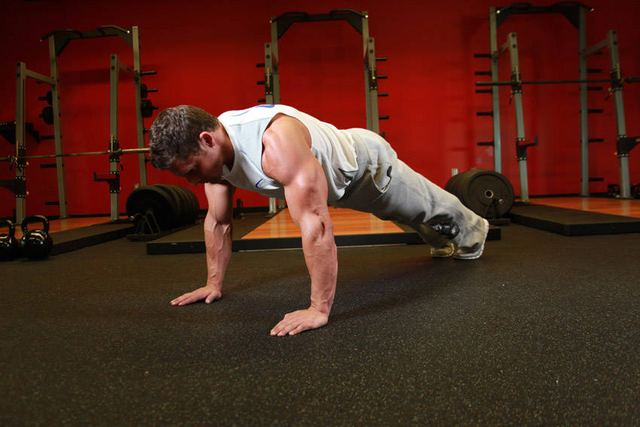
Men's Intermediate Home Workout (Dumbbells + Pull-Up Bar)
4 days/week · 8 weeks · A pair of adjustable dumbbells, a doorway pull-up bar and a bench or sturdy chair
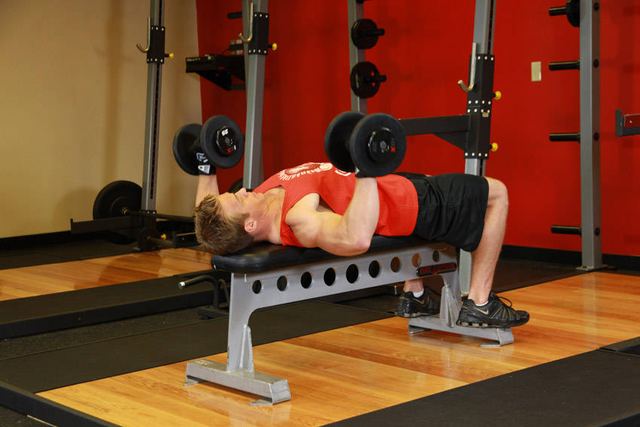
Advanced Home Workout for Men (Push / Pull / Legs + Conditioning)
5 days/week · 8 weeks · Adjustable dumbbells (up to 50–90 lb / 24–40 kg), a pull-up bar, a bench, a kettlebell and a jump rope
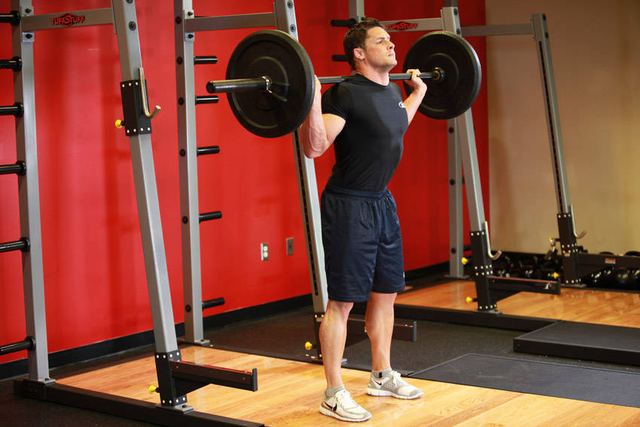
Men's Beginner Gym Workout Plan (3-Day Full Body)
3 days/week · 8 weeks · Standard commercial gym: barbells, dumbbells, cable machines, leg press
Men's Intermediate Gym Program (4-Day Upper / Lower Split)
4 days/week · 8 weeks · Full gym