Progressive Overload Explained: The #1 Rule for Getting Stronger
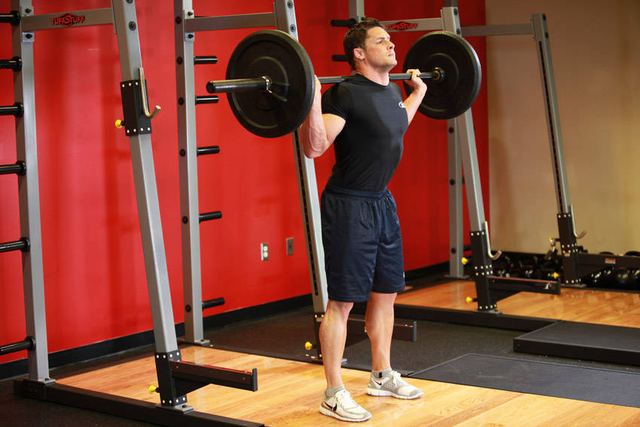
If there is one training principle that separates people who make progress from people who stay the same for years, it is progressive overload. Here is what it means, how to use it in every workout, and how to keep progressing when things get hard.
What is progressive overload?
Progressive overload means gradually increasing the demands you place on your body over time. Your body is extremely good at adapting to stress. When you lift a weight that challenges you, your muscles, nerves, tendons and bones adapt so the same task becomes easier. If you then keep doing exactly the same workout, there is no new reason to adapt, and progress stops.
The principle was famously illustrated by the ancient Greek legend of Milo of Croton, who supposedly carried a calf on his shoulders every day as it grew into a bull. The weight increased so gradually that his strength kept up. Modern sports science confirms the idea: steady, manageable increases in training stress produce steady adaptations.
Why it matters
Without progressive overload you can still maintain your fitness, which is valuable. But if you want to build muscle, get stronger, improve endurance or change your body shape, you need to keep giving your body a reason to change. Studies comparing progressive programs with non-progressive ones consistently show better strength and muscle gains when load or reps increase over time.
7 ways to apply progressive overload
1. Add weight
The classic method. If you squatted 135 lb (60 kg) for 3 sets of 8 last week with good form, try 140 lb (62.5 kg) this week. Small jumps keep progress going longer. Lower-body lifts can usually progress a bit faster than upper-body lifts.
2. Add reps
Use a rep range, such as 8–12. Start a weight at 8 reps per set, add reps each week until you reach 12 on all sets, then increase the weight and drop back to 8. This is called double progression and is ideal for dumbbells, where weight jumps are large.
3. Add sets
Going from 3 to 4 sets increases total training volume, one of the main drivers of muscle growth. Do this gradually, and not on every exercise at once.
4. Use a harder variation
Perfect for home training. Examples: incline push-up → push-up → decline push-up; glute bridge → single-leg bridge; bodyweight squat → Bulgarian split squat.
5. Slow down the tempo
Lowering the weight over 3–4 seconds increases time under tension and difficulty without adding load. Pauses at the hardest point (the bottom of a squat, the chest in a push-up) also make an exercise harder.
6. Increase range of motion
Squatting deeper, doing deficit lunges from a step, or lowering further in a push-up increases the challenge. Training through a full range of motion is generally beneficial for muscle growth.
7. Improve quality and reduce rest (with care)
Doing the same reps with better control and technique is also progress. Shortening rest can increase density, but very short rests reduce how much you can lift, so use this mainly for conditioning.
How fast should you progress?
| Level | Typical rate of progress |
|---|---|
| Beginner (0–6 months) | Add weight or reps most sessions or every week |
| Intermediate (6 months – 2 years) | Progress every 1–4 weeks |
| Advanced (2+ years) | Progress over months, using planned training blocks |
Do not force progress at the expense of form. A rep only counts if it is done with the same technique as the first rep.
Track everything
You cannot progressively overload what you do not measure. Keep a simple log with the date, exercise, weight or variation, sets and reps. Before each workout, look at what you did last time and aim to beat it by a small margin. A notebook, a spreadsheet or a free app works. People who track their training consistently make faster progress because every session has a clear target.
| Week | Dumbbell press (lb) | Sets × reps | Note |
|---|---|---|---|
| 1 | 30 | 3 × 8, 8, 7 | Start |
| 2 | 30 | 3 × 9, 9, 8 | + reps |
| 3 | 30 | 3 × 11, 10, 10 | + reps |
| 4 | 30 | 3 × 12, 12, 12 | Top of range |
| 5 | 35 | 3 × 8, 8, 8 | + weight, reset reps |
Breaking a plateau
Everyone eventually stalls on a lift. When it happens for 2–3 weeks in a row, check these in order:
- Sleep: are you getting 7–9 hours?
- Food: are you eating enough protein and calories? Strength progress is hard in a big calorie deficit.
- Stress and recovery: work, life and too much cardio all draw from the same recovery budget.
- Technique: film a set; small form issues often limit progress.
- Program: try a different rep range for 4–6 weeks, or swap to a similar exercise (for example from barbell bench to dumbbell bench).
- Deload: take a lighter week with about half the sets. Fatigue often hides fitness; many people set personal bests right after a deload.
Mistakes to avoid
- Adding weight every session no matter what, until form collapses.
- Jumping by too much (for example 20 lb on a bench press).
- Changing exercises every week, so nothing can be progressed.
- Only progressing load and never volume or variations.
- Ignoring pain. Discomfort from effort is normal; joint pain is a signal to change something.
Progressive overload in our programs
Every home and gym program on HelloMyTrainer includes an 8-week progression table showing exactly when to add reps, weight or sets, plus a deload week. Use the one-rep max calculator to estimate your strength and choose training weights for heavier lifts.
Progressive overload at home
Many people believe home training stops working after a few weeks. It does not, if you apply progressive overload creatively. Here is a sample progression ladder for three key movements:
| Level | Push | Squat | Hinge / glutes |
|---|---|---|---|
| 1 | Wall push-ups | Box squat to a chair | Glute bridge |
| 2 | Incline push-ups | Bodyweight squat | Glute bridge with pause |
| 3 | Push-ups | Goblet squat | Single-leg glute bridge |
| 4 | Tempo push-ups (4-sec lowering) | Reverse lunge | Dumbbell Romanian deadlift |
| 5 | Decline push-ups | Bulgarian split squat | Single-leg RDL |
| 6 | Weighted / deficit push-ups | Weighted split squat | Heavy dumbbell hip thrust |
Move up a level when you can comfortably complete 3 sets of 15–20 reps with perfect form.
A simple introduction to periodization
Periodization means planning training in phases. You do not need complicated systems, but one simple structure works well for intermediate lifters:
- Weeks 1–3 (build): moderate weights, moderate volume.
- Weeks 4–6 (push): heavier weights or more sets.
- Week 7 (peak): hardest week, aim for personal bests.
- Week 8 (deload): half the sets, lighter weights.
Every program on HelloMyTrainer follows a version of this 8-week structure. After the deload, restart the cycle with slightly heavier weights.
Using effort scales (RPE and RIR)
Two simple tools help you judge how hard a set is:
- RIR (reps in reserve): how many more reps you could have done. 2 RIR means you stopped two reps before failure.
- RPE (rate of perceived exertion): a 1–10 scale. RPE 8 roughly equals 2 RIR; RPE 10 is an all-out set.
Most productive training happens at RPE 7–9 (1–3 RIR). Beginners tend to underestimate how many reps they have left, so it is fine to occasionally take a safe exercise, such as a machine or push-ups, close to failure to calibrate your sense of effort.
Does progressive overload differ for men and women?
No. The principle is identical. Women sometimes find upper-body weights increase more slowly because the smallest dumbbell jumps (for example 5 lb to 10 lb) represent a large percentage increase. Solutions: use the rep-range method, use microplates or fractional plates, or use cable machines with smaller increments.
The bottom line
Progressive overload is simple: do a little more over time. Add weight, reps, sets, range or difficulty in small steps, track every workout, and manage recovery. Follow this rule for months and years and you will keep getting stronger, fitter and more muscular.
Frequently asked questions
How often should I increase the weight?
Beginners can often add weight every week. Intermediate and advanced lifters progress more slowly, every few weeks or months.
Can I use progressive overload with bodyweight exercises?
Yes. Add reps, slow the tempo, add pauses, or move to harder variations.
What is a deload week?
A lighter week, typically with about half the usual sets or lighter weights, used every 4–8 weeks to reduce fatigue.
Is progressive overload the same for women?
Yes. The principle applies equally to men and women.
Disclaimer: This article is for general education and is not medical advice. Consult a doctor or qualified professional before making major changes to your exercise or diet, especially if you have a health condition.
Keep reading
How to Lose Belly Fat: A Science-Based Guide for Men and Women
Why belly fat is stubborn, why crunches alone will not burn it, and the exact nutrition, training, sleep and stress habits that actually shrink your waist.
The 12 Best Glute Exercises for Women (Home & Gym) + Sample Workouts
The most effective glute exercises for women, explained: hip thrusts, RDLs, split squats, abduction and more, plus how to program them for stronger, rounder glutes.
How to Build Muscle: The Complete Beginner's Guide (2026)
Everything a beginner needs to build muscle: training volume, reps, progressive overload, protein, calories, sleep and a simple first program.